
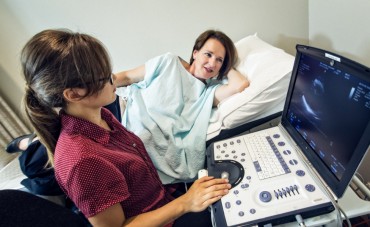
Echo/Doppler
-
What is an Echocardiogram?
An echocardiogram (often called an echo) is a painless ultrasound test that uses sound waves to create moving pictures of your heart.
It assesses your heart’s structure, its valves and pumping function in real time.
-
Why has my Doctor ordered an Echocardiogram?
Your doctor may request an echocardiogram to:
- Investigate shortness of breath, chest pain, dizziness, or palpitations
- Assess heart valve problems (leakage or narrowing)
- Measure heart pumping strength (ejection fraction)
- Monitor known heart conditions
- Check the heart after a heart attack, infection, or surgery
- Assess causes of heart murmurs
- Monitor the effects of certain medications or treatments
-
What does an Echocardiogram show?
An echocardiogram can provide information about:
- Size and thickness of the heart chambers
- Heart valve structure and function
- Heart muscle movement and strength
- Blood flow through the heart
- Pressure within the heart
- Fluid around the heart (pericardial effusion)
-
Is an Echocardiogram safe?
Yes. An Echocardiogram is very safe.
It uses ultrasound (not radiation) and has no known risks or side effects, including for pregnant patients.
-
Do I need to prepare for the test?
No special preparation is required:
- You may eat, drink, and take medications as normal
- Wear comfortable clothing (you will undress from the waist up and be given a patient gown to wear)
- Avoid applying lotions or oils to your chest on the day, if possible
-
What happens during the test?
- You will lie on an examination bed, usually on your left side
- Small adhesive ECG dots may be placed on your chest
- A Cardiac Sonographer will apply gel and move a probe over your chest
- You may be asked to breathe in, breathe out, or briefly hold your breath
The test is non-invasive and generally painless, though you may feel mild pressure from the probe.
-
How long does an echocardiogram take?
Most Echocardiograms take up to 40 minutes.
More complex studies may take slightly longer.
-
Will it hurt?
No. An Echocardiogram should not be painful.
Some patients may feel mild pressure where the probe is applied, but it is generally very comfortable.
-
Can I drive home afterwards?
Yes. You can return to normal activities immediately after the test, including driving and work.
-
Who performs the Echocardiogram?
The test is performed by a qualified Cardiac Sonographer with specialist training in heart ultrasound.
Your results are then reviewed and formally reported by a Cardiologist.
-
When will I get my results?
A Cardiologist will analyse your Echocardiogram.
Please allow up to 5 business days for your results to be with your referring Doctor.
A detailed report is sent to your referring Doctor, who will discuss the results with you.
Urgent or unexpected findings are communicated promptly.
-
Does Medicare cover an Echocardiogram?
In most cases, Medicare provides a rebate when:
- You have a valid referral from a GP or Specialist
- The test meets Medicare eligibility criteria
Any out-of-pocket costs will be explained to you before your appointment.
-
What if I feel unwell during the test?
Please let the Sonographer know immediately if you feel:
- Short of breath
- Dizzy or light-headed
- Chest discomfort
Your safety is always the priority.
-
What if I need to cancel or reschedule?
If you need to change your appointment, please contact WA Cardiology as early as possible so the time can be offered to another patient.
-
Who can I contact if I have questions?
If you have any questions before or after your echocardiogram, please contact WA Cardiology – the team will be happy to help.